
Founder story
The story behind
Glucose Mastery
Why I built the lifestyle program for adults with high blood sugar, after my own doctor gave me the same warning. By George A. Watkins, MS Public Health, Founder, Better Health Nexus®.
Get the free Quick Start GuideGet the full 90-day Toolkit
The guide is free, no payment details. Educational only, not medical advice.

MS Public Health
trained to read the research, not the headlines
Research-based
built on published studies, not trends
Lived it first
the same warning, from my own doctor
When I got the result, I was worried and confused.
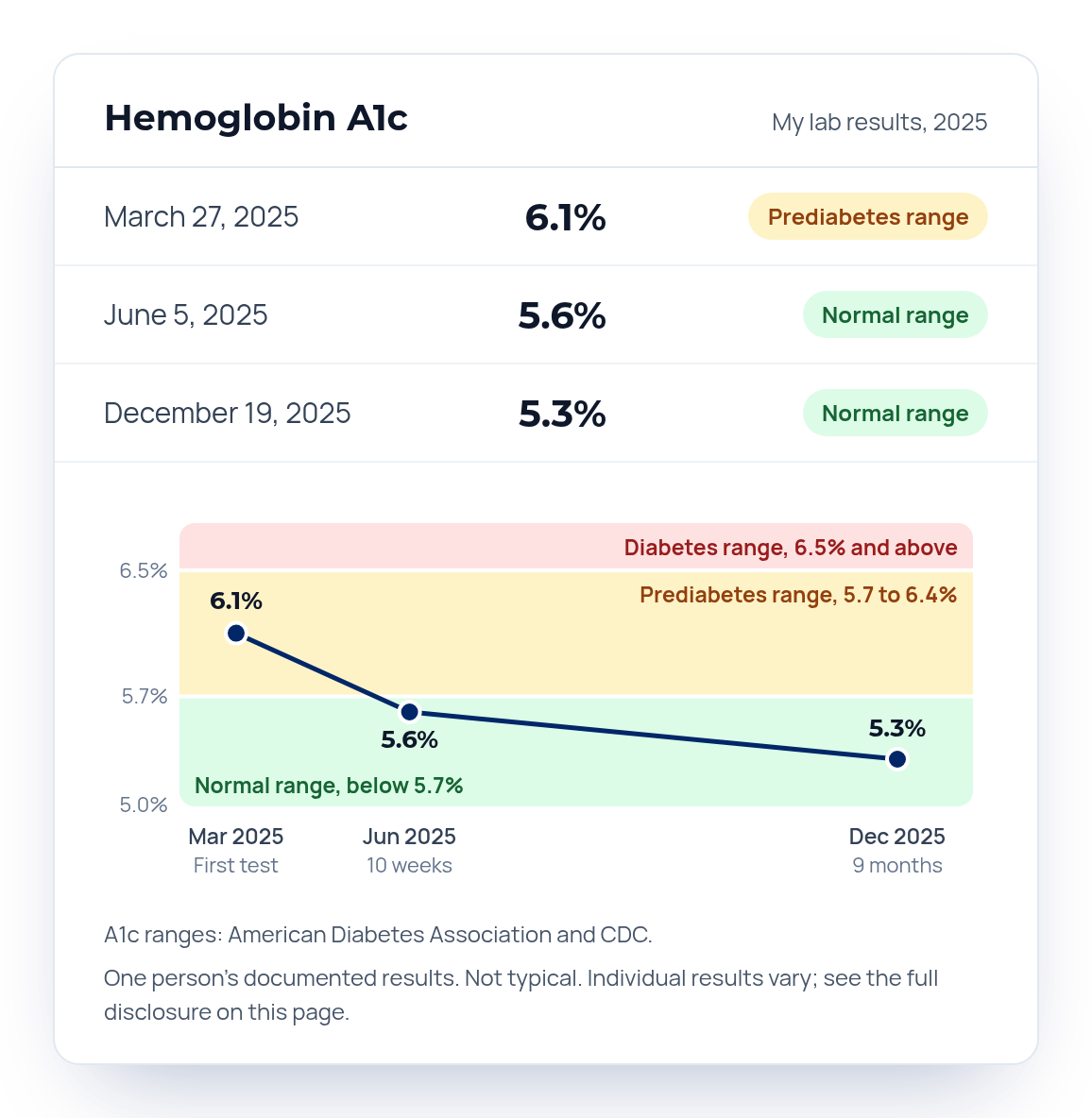
In March 2025, at 42 years old, I sat in my doctor’s office and heard something I hadn’t prepared myself for. My Hemoglobin A1c had come back at 6.1 percent, in the prediabetic range.
He handed me some general guidance about eating better and exercising more, scheduled a follow-up three months out, and sent me on my way.
I left that office with a pamphlet and a lot of anxiety. I knew how bad this could turn out, because of what I had already watched unfold in my own family, and I couldn’t ignore this result.
I didn’t need a textbook to explain where this leads.
I had watched it happen to someone close to me. My stepdad was educated, capable, and admired by the people around him. Sadly, metabolic health challenges that went unaddressed for years eventually caught up with him in ways that could not be undone.
I remember standing in the hospital hallway with my little brother, both of us feeling helpless, watching a strong man’s independence disappear. He passed before his time. The years he lost with his family cannot be recovered.
When my own numbers came back elevated, I did not have the option of waiting to see what happened.
Why this matters
115 million
That is the estimated number of U.S. adults with prediabetes. Many are handed the same general advice to eat better and move more, with no clear roadmap for what to do next.
Source: CDC, National Diabetes Statistics Report, estimate for U.S. adults aged 18 and older.
I had the will, but no roadmap to follow.
I did what most people do: I turned to the internet. What I found was not a roadmap. It was a wall of competing voices. Try keto. Try carnivore. Fast longer. Cut all carbs. Take this supplement. Try that hack.
I tried most of it. Some of it was not terrible advice on its own. But none of it was organized, none of it was sustainable, and I kept bouncing between 6.0 and 6.2 percent with no real traction.
The breakthrough came when I stopped following everyone else and went back to what I actually knew how to do: read the research.
Three areas. Consistent effort. Compounding results.
With an MS in Public Health, I spent months reviewing peer-reviewed literature on metabolic health, blood sugar regulation, and lifestyle intervention. What I found was specific, and that specificity was exactly what the generic advice had been missing.
Eat
The Smart Glucose Plate
How you eat matters. The order of your meals, their timing relative to your natural rhythms, and what you put on your plate interact in ways generic advice rarely accounts for.
Move
The GLUT4 Movement Protocol
Brief, consistent movement across the day may help post-meal glucose more than a single long workout. Sleep and stress management belong in this pillar too.
Track
The 90-Day Glucose Tracking Sheet
You cannot improve what you are not measuring. This pillar creates a simple feedback loop from your daily numbers so you can see what is working and stay consistent.
Why lifestyle comes first. The strongest evidence for diabetes risk reduction comes from the Diabetes Prevention Program, a large study funded by the National Institutes of Health. Adults with elevated blood sugar who made structured lifestyle changes, aiming for modest weight loss and at least 150 minutes of activity a week, developed type 2 diabetes 58% less often than the placebo group over an average of 2.8 years (Knowler et al., New England Journal of Medicine, 2002). That is why Glucose Mastery is a lifestyle program. It was not part of that study, it is not a CDC-recognized lifestyle change program, and individual results vary.
My doctor said: “That’s not trying. That’s progress.”
About ten weeks after my original result, I went back for follow-up bloodwork. My A1c had moved from 6.1 to 5.6 percent, back below the prediabetic range.
I stayed consistent. Over the following months I kept all three pillars running. The habits that took deliberate effort at the start had become automatic. In December 2025, nine months in, my A1c was 5.3 percent.
Individual Results Disclosure (FTC 16 CFR §255.2): The blood sugar results described reflect the personal experience of George A. Watkins, documented in his own lab reports between March and December 2025. Starting result: 6.1%. Result at 10 weeks: 5.6%. Result at 9 months: 5.3%. These results are not typical. Most people who implement dietary and lifestyle changes will not achieve identical outcomes. Individual results depend on many factors including baseline health status, adherence, diet quality, exercise consistency, and overall program engagement.

The biggest change was how I felt.
The numbers were meaningful, but they were not the part I noticed every day. I went from fearful and hopeless to informed and in control. That shift is the benefit I got from the habits I built, and I am thankful for it.
That is what Glucose Mastery is built to help you do: stop dreading your next result and feel in control of your health again.
I built the program I needed because it did not exist.
Even with a graduate background in public health, I spent months piecing together scattered research, trial and error, and my own tracking data before I found what worked for me.
Most people do not have the background, the time, or the appetite for that process. They have a lab result, a follow-up appointment, and a feeling that they are running out of runway.
Glucose Mastery is the lifestyle program I wish had been handed to me the day I walked out of that doctor’s office: organized, grounded in research, and built for adults with high blood sugar who want to feel in control again.
Who this is for
✓Adults with high blood sugar who want a structured, research-based plan to work on it with their doctor.
✓People who have tried generic advice without results, and who want a real program rather than another list of things to cut from their diet.
✓People who are willing to show up consistently and let the results compound over time.
Insulin’s job is to move glucose into your cells. Glucose Mastery works on the daily habits that support that job, and you review the trend with your doctor.
Ready to start your first week?
Get the free 7-Day Quick Start Guide: seven habits, one a day, in the order to build them, starting today.
Get the free Quick Start GuideGet the full 90-day Toolkit
The guide is free, no payment details. Educational only, not medical advice.
Educational Disclaimer: This content is for educational and informational purposes only. It is not medical advice, diagnosis, or treatment. George A. Watkins holds a Master of Science in Public Health and is not a licensed physician, registered dietitian, or clinical healthcare provider. Always consult your licensed healthcare provider before making changes to your diet, exercise routine, or supplement intake, particularly if you have an existing medical condition or are taking prescription medications. If you have diabetes or take any medication for blood sugar, use this alongside your doctor's treatment plan, never instead of it, tell your doctor before you change how or when you eat, and never change a medication on your own.
Physician Reference: The physician mentioned in this content is the founder’s personal primary care provider. No compensation was provided. The reference does not constitute an endorsement of Glucose Mastery or any Glucose Mastery product.